Surviving the chaotic open-plan startup office
Official orientation guide for surviving your first week at a 'dynamic' startup.
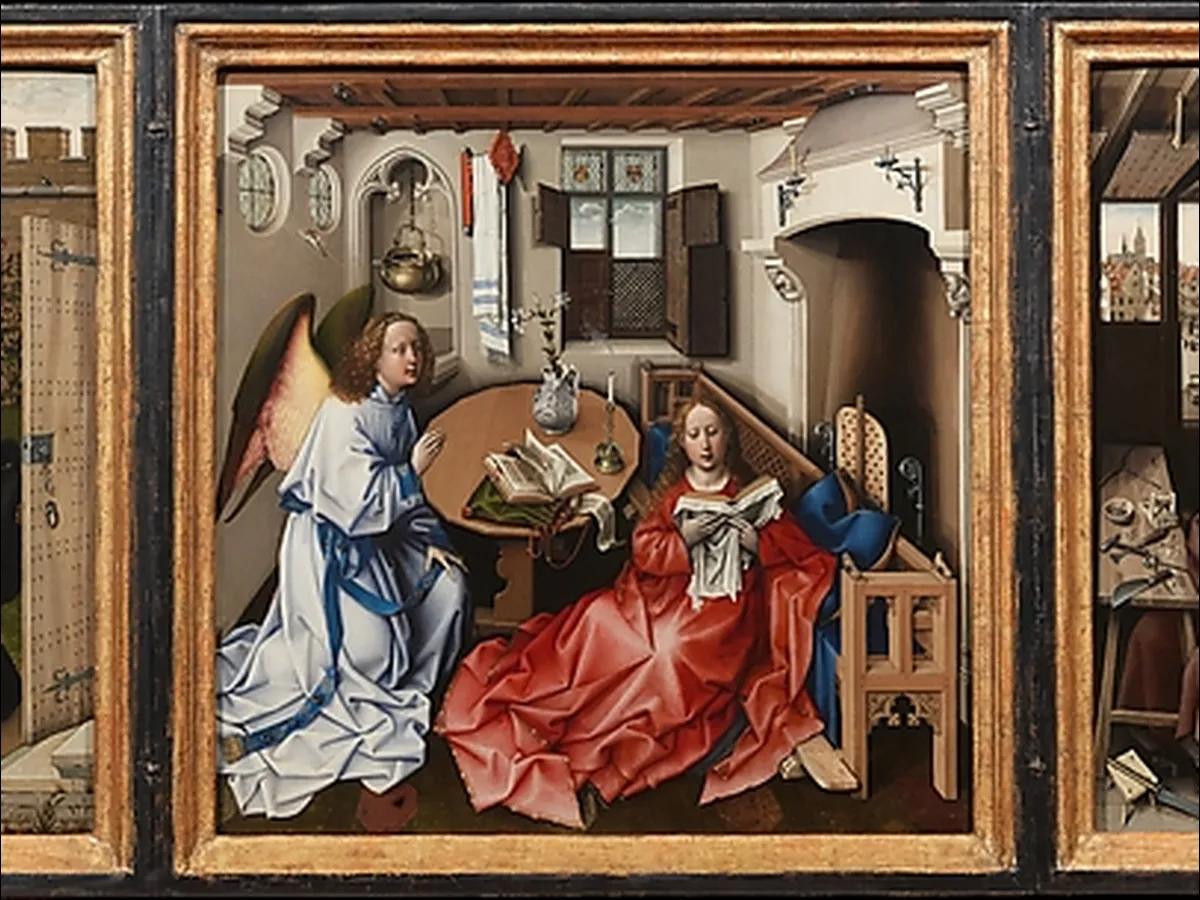
“Step 1: Establish boundaries. When the guy with the wings walks in for a 'quick sync,' maintain aggressive eye contact with your reading material.”
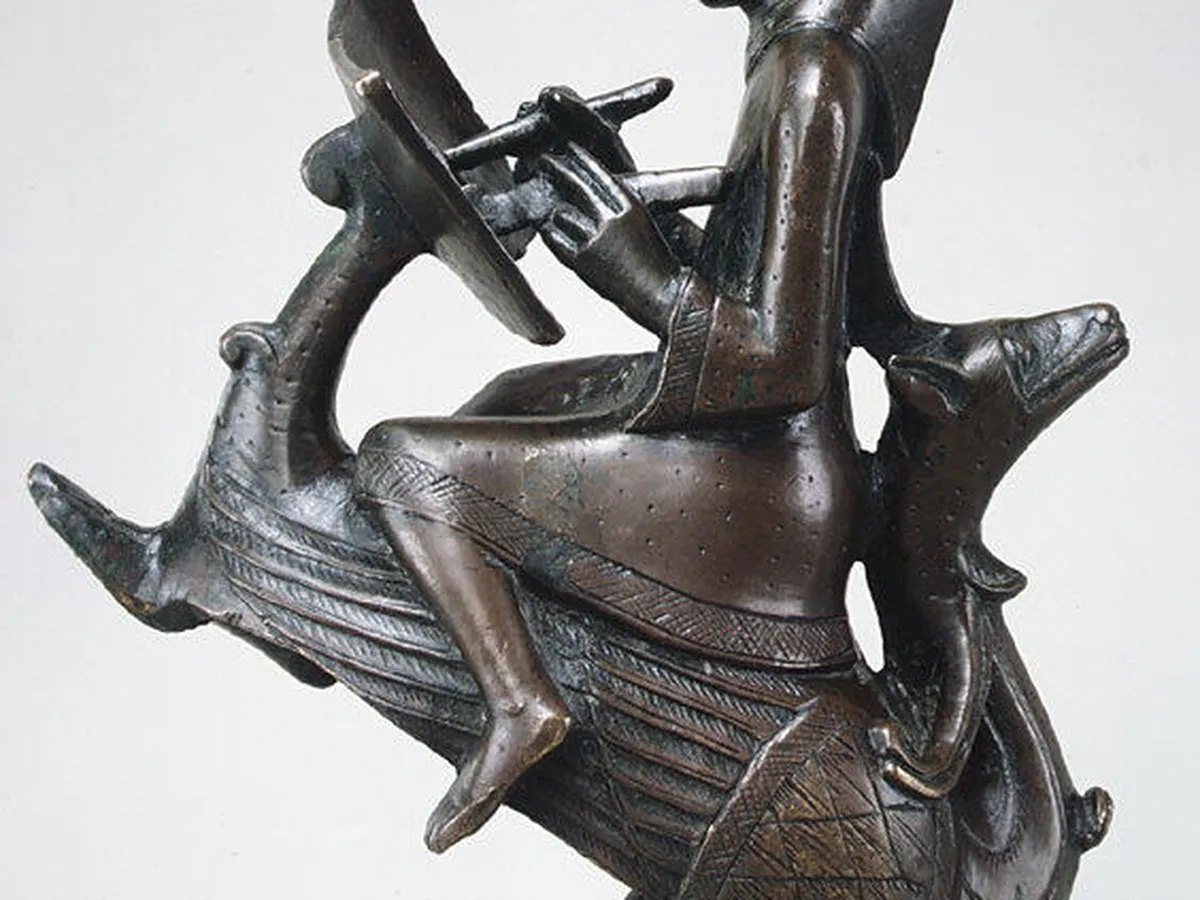
“Step 2: Adapt to the mandated ergonomic furniture. The dragon-neck kneeling chair will destroy your lumbar, but you must keep taking notes.”

“Step 3: Ignore the open-plan culture. If your colleagues decide to wrestle naked or hold a brainstorm in a wooden tub, just type harder.”

“Step 4: When upper management manifests from a cloud to check your progress, drop the reading material. Raise your club, bite your emotional support bread, and accept that boundaries are a myth.”
The Merode Altarpiece is famous for its 'disguised symbolism.' The domestic setting reflects 15th-century Netherlandish life, but every object—from the lilies to the mousetrap in Joseph’s shop—carries a theological meaning, such as the cross being a 'mousetrap for the devil.'
This 12th-century brass sculpture from Magdeburg, Germany, depicts a scribe in a 'drollery' pose. While scribes often complained of the physical toll of writing, sitting on a wyvern (a two-legged dragon) likely served as a humorous commentary on the monstrous effort of manuscript production.
Medieval calendars often featured 'Labors of the Months,' depicting seasonal activities. This 16th-century example from Hildesheim includes playful vignettes like bathing and wrestling, showing that even religious prayerbooks embraced the 'sumptuous delight' of secular, often chaotic, daily life.
In Gothic manuscripts, the 'Fool' often illustrated Psalm 52 ('The fool says... there is no God'). These 'drolleries' were satirical marginalia meant to amuse pious readers. Here, the fool’s club and bread signify his worldly, irrational nature compared to the divine order above.