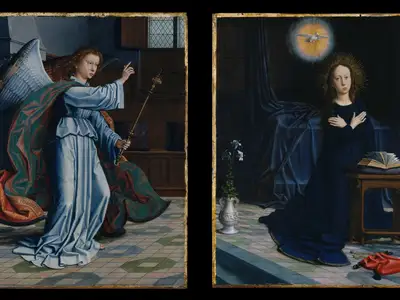
The Subtle Tyranny of Modern Sensibilities
We finally got a table at the city's most pretentious new pop-up restaurant.

“We finally secured a table at the city's most pretentious experiential restaurant. The required seating posture was 'stiffly alienated.'”
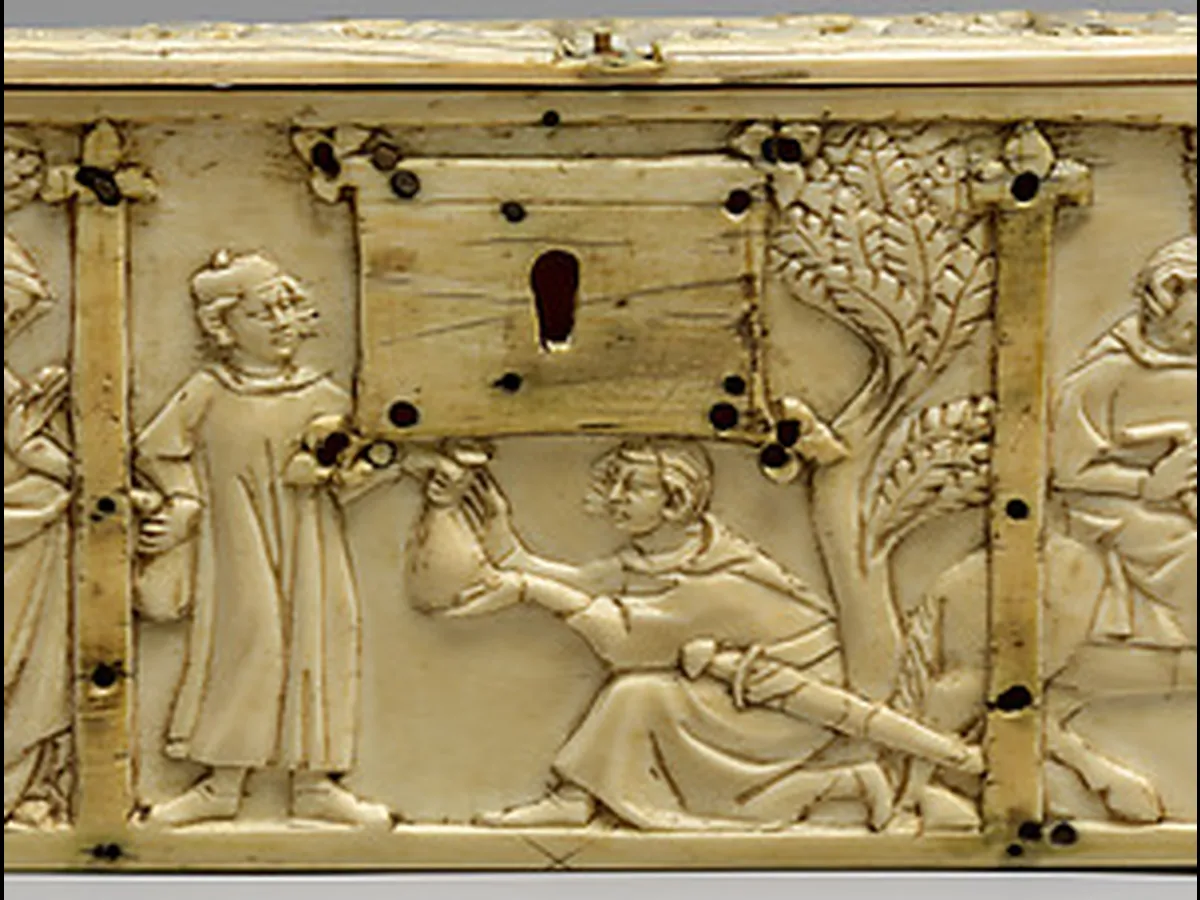
“To get a refill on tap water, my husband had to kneel and offer a velvet pouch of our remaining life savings to the busboy.”
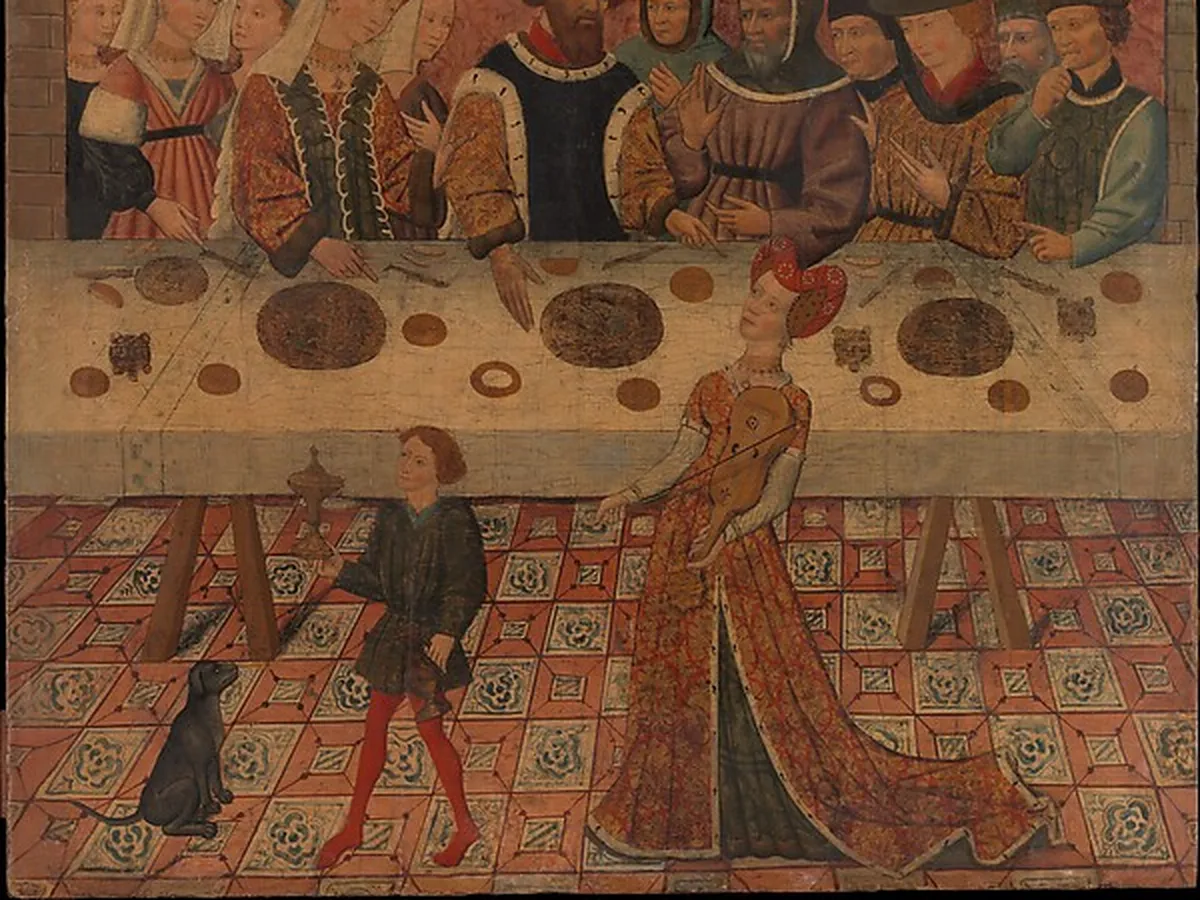
“Our server then shattered her own spine to play the fiddle, explaining that 'standing upright compromises the chef's acoustic vision.'”

“I asked the manager if the 'experience' included ranch dressing. He held this exact stare until security dragged us out.”
This "January" scene from a Book of Hours depicts the traditional "Labors of the Months." While the couple looks stiff to modern eyes, medieval feasts were highly choreographed displays of status, where seating and posture signaled one's precise rank within the social hierarchy.
This 14th-century ivory casket uses the biblical Parable of the Prodigal Son to warn against "high living." The kneeling figure offering a pouch likely represents the son squandering his inheritance—a scene of financial ruin repurposed here as a desperate bid for a water refill.
Medieval artists often depicted Salome’s "wicked" dance as an acrobatic feat, such as this "bridge" pose. To a 15th-century audience, this physical contortion wasn't just a "bug"; it was a visual shorthand for moral disorder and the dangerous subversion of natural grace.
This reliquary once held the physical remains of St. Louis of Toulouse. Its "unamused" expression is a hallmark of 14th-century Italian polychrome wood sculpture, designed to create a lifelike, "present" connection between the worshipper and the saint’s divine authority.