The Burning Software Project
Live coverage from the Q3 deployment. The system is down, and the bugs are feeding.
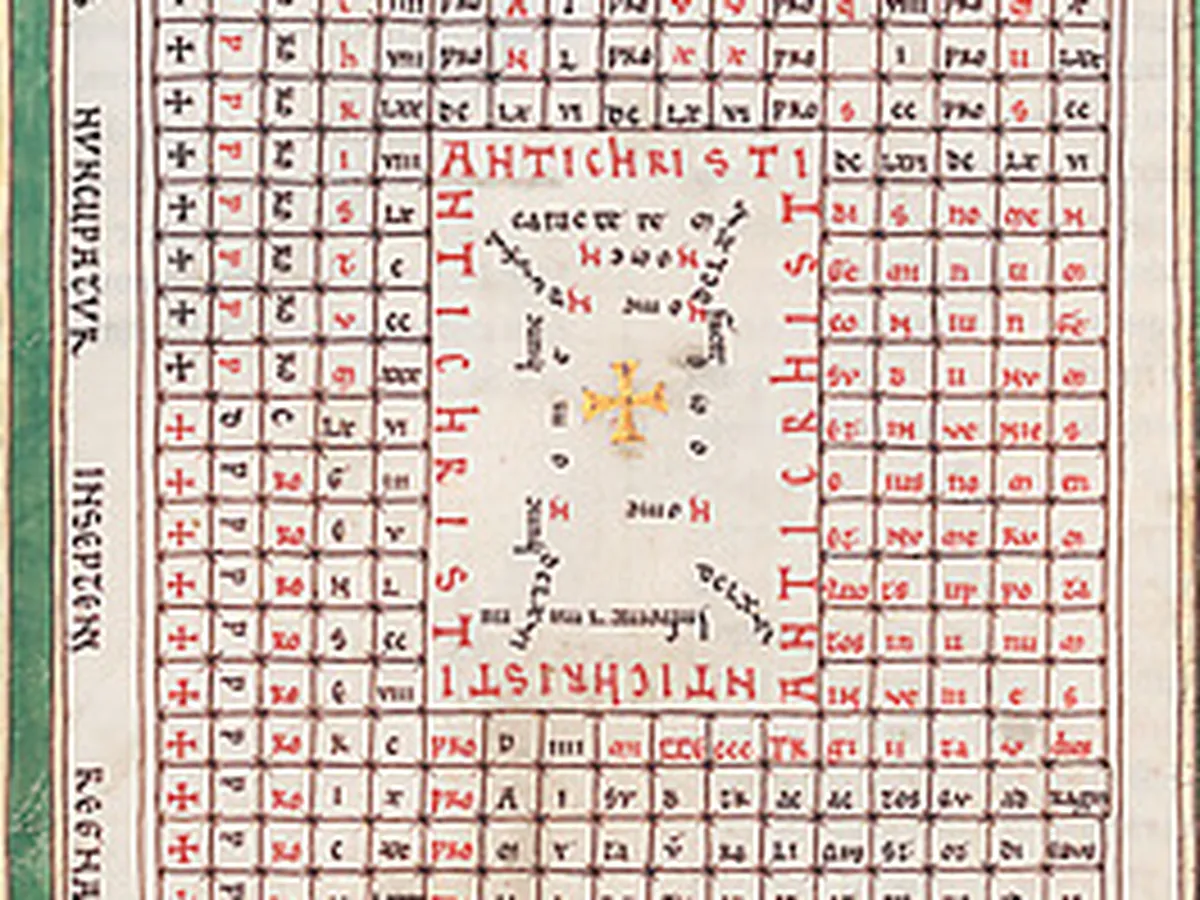
“Good evening. We begin tonight with the Q3 software deployment. Management has just released the master tracking spreadsheet, which appears to be a literal demonic hex grid.”
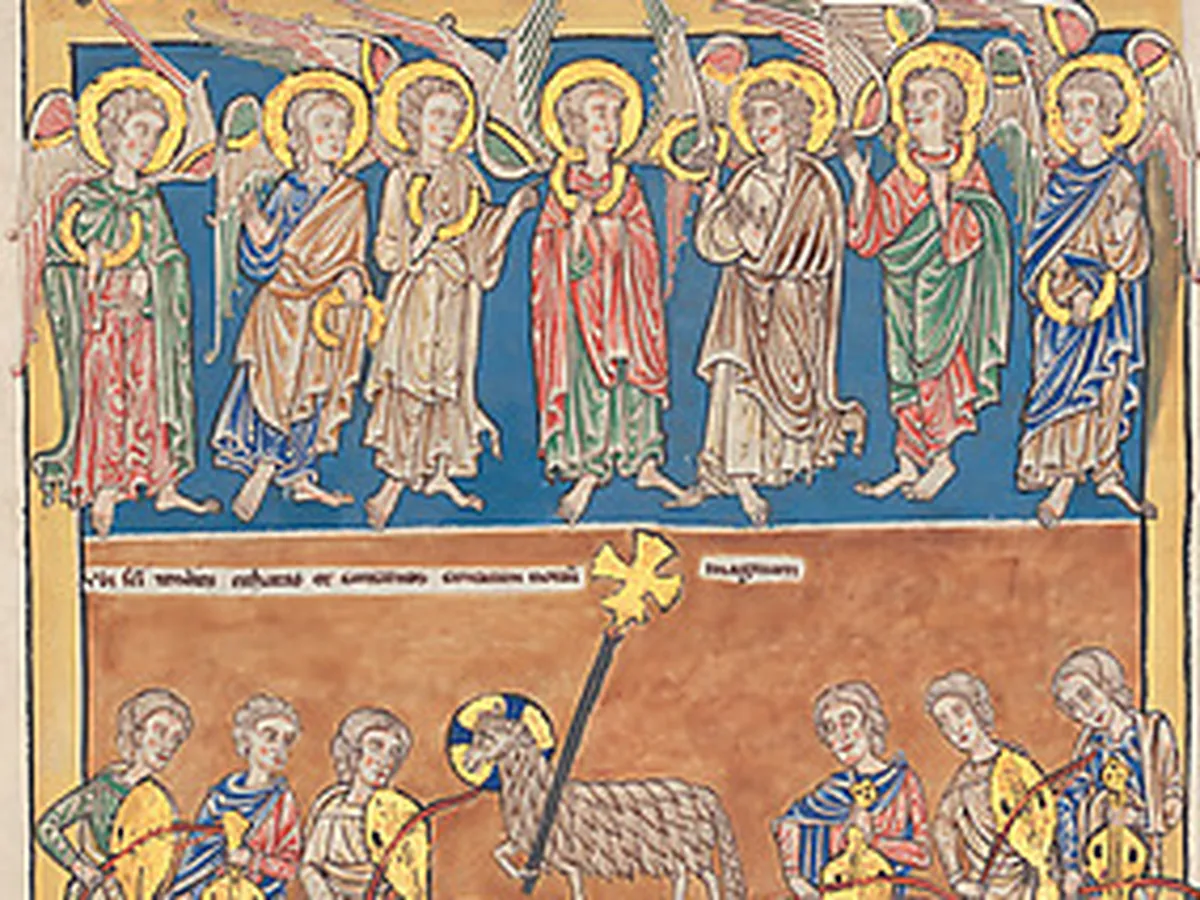
“Quality Assurance has lined up to present seven catastrophic vulnerability reports. The core engineering team has responded by playing soothing lute music.”
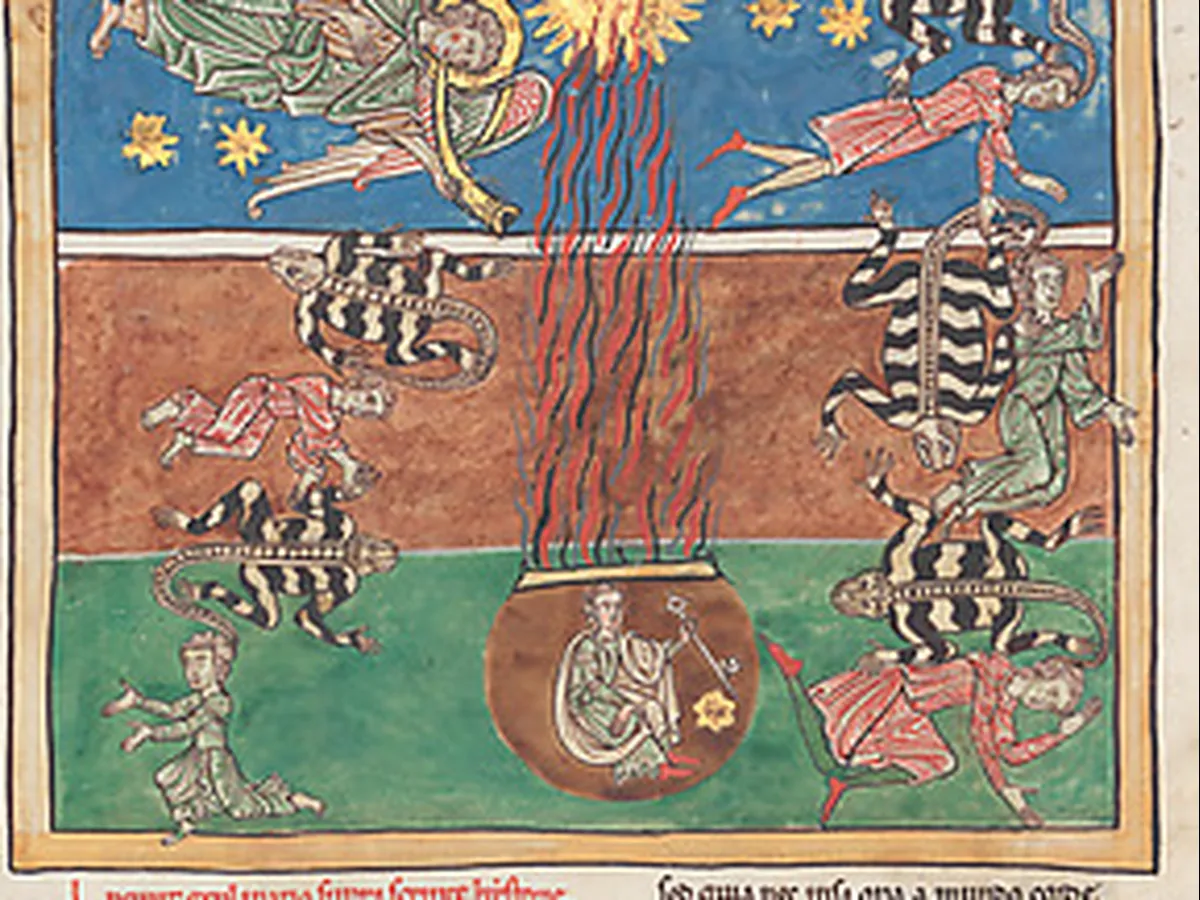
“The release was pushed to production regardless. The new agile features have breached the firewall and are now actively feeding on the end-users.”

“Through it all, the external contractors continue to harvest their billable hours, entirely unbothered by the massive, project-ending crustacean beside them. Good night, and good luck.”
This "spreadsheet" is a 12th-century numerical grid used to calculate the "code" of the Antichrist. In Beatus manuscripts, scholars assigned numbers to letters to prove various names totaled 666—a practice known as gematria, used here to identify the ultimate agent of the Apocalypse.
These "vulnerability reports" are the Seven Last Plagues of Revelation. While the angels above prepare to pour out divine wrath, the figures below play vielles (medieval fiddles) in the "Hymn of the Lamb," a liturgical scene representing the triumph of the faithful amidst disaster.
These "agile features" are the locusts of the Fifth Trumpet. In medieval Spanish illumination, they were often depicted with striped bodies and scorpion-like tails. According to the Book of Revelation, they were commanded not to kill, but to torment humanity for five months.
The "project-ending crustacean" is actually the zodiac sign Cancer. Medieval calendar pages, like this 16th-century Book of Hours, paired the "Labors of the Months" (here, hay-harvesting) with astrological symbols to show the harmony between earthly work and the celestial order.