The Burden of High-Stakes Social Performance
A casual group dinner descends into chaos when the check is split evenly.

“We agreed to a casual dinner catch-up. The physical distance across this table suggests we are instead negotiating a tense hostage exchange.”
“The mandatory group photo portion of the evening begins. We all lock our joints into rigid, unnatural angles to simulate the concept of friendship.”
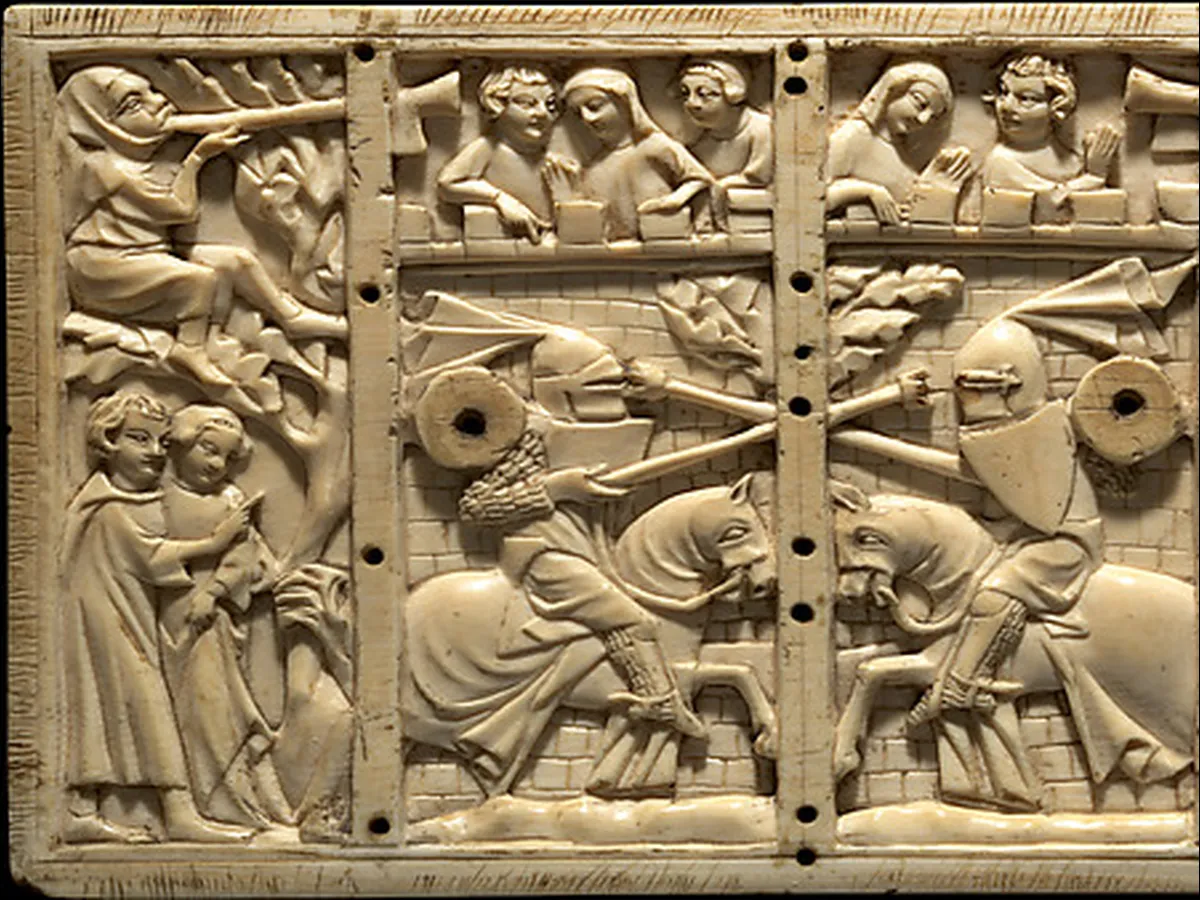
“The restaurant acoustics are so hostile that casually asking the woman in the veil to pass the salt requires blasting a six-foot brass instrument directly into her face.”
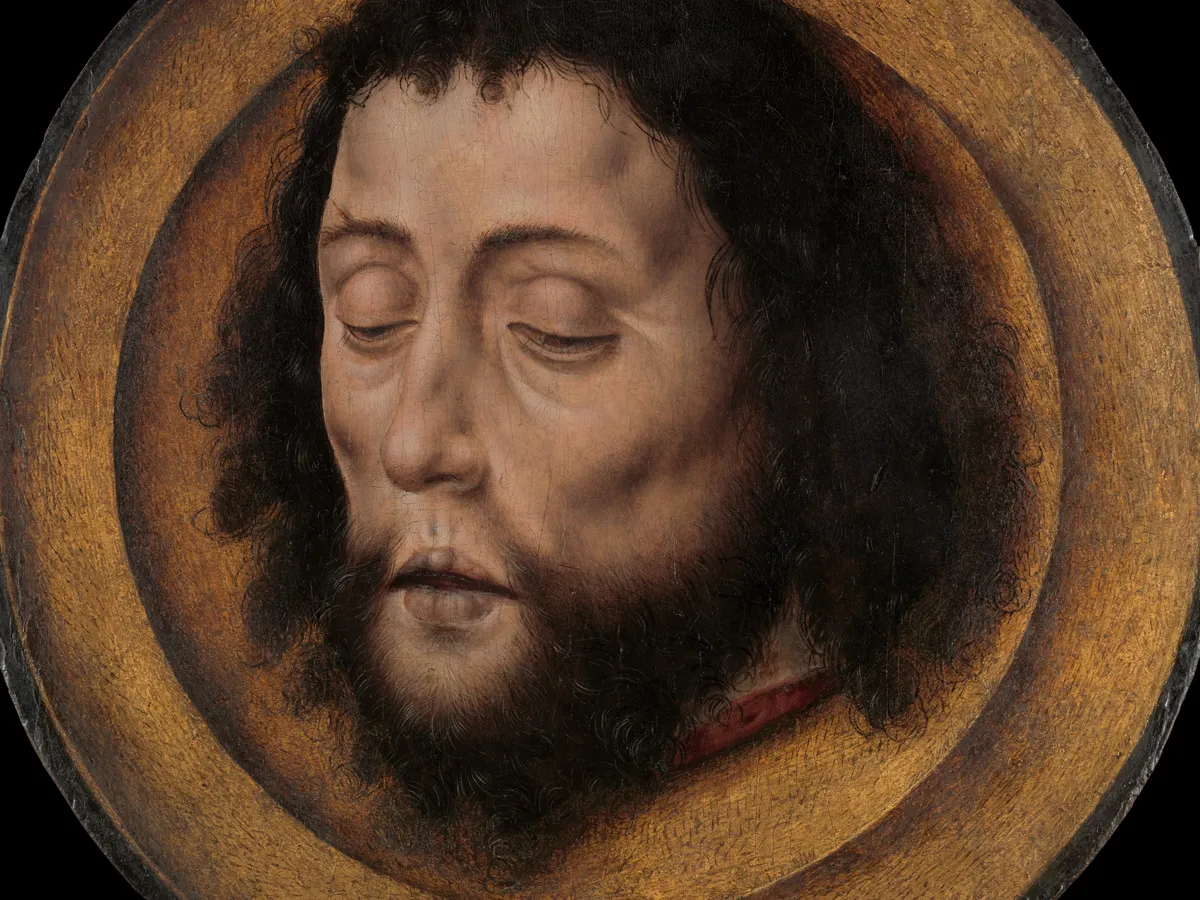
“The check arrives to be split evenly. I only had tap water, but my financial decapitation is served neatly on a gold rim.”
This scene from a Book of Hours for Queen Isabella of Spain depicts the 'Labor of the Month' for January: feasting. Such manuscripts were often high-stakes diplomatic gifts; this one was likely presented to the Queen by a cardinal seeking her political favor and patronage.
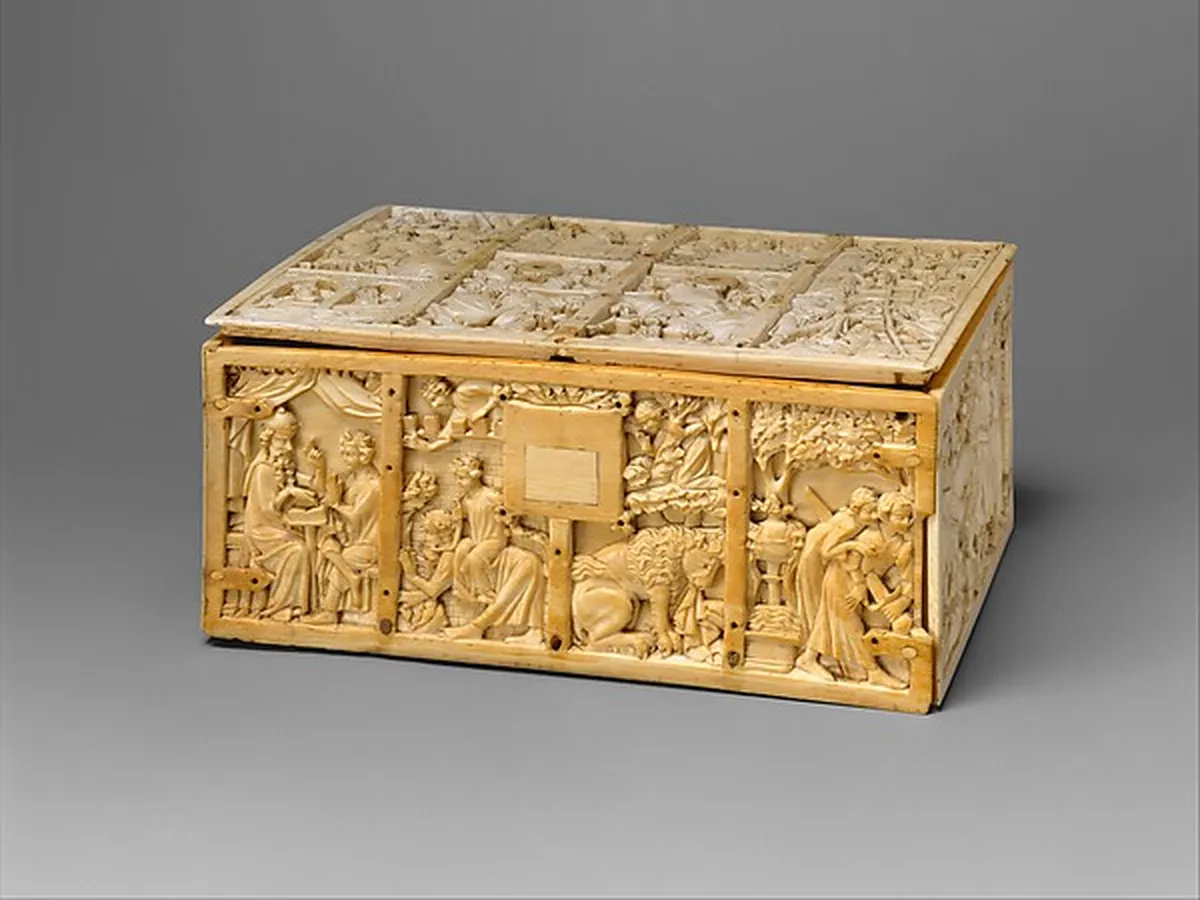
This ivory box depicts the 'Castle of Love,' a popular medieval allegory where knights 'attack' a fortress with roses. These luxury items were often wedding gifts, reflecting the highly performative and ritualized nature of courtly romance and social status in the 14th century.
Medieval tournaments were loud, crowded spectacles of social signaling. Spectators packed into balconies while musicians blasted long brass horns called 'busines.' These events were less about sport and more about demonstrating nobility and wealth to a massive, judging audience.
Known as a 'Johannesschüssel,' this realistic depiction of Saint John’s head on a platter was a popular devotional object. The 'served' aesthetic was intended to make the biblical event feel immediate and visceral, encouraging viewers to meditate on sacrifice and divine justice.