The Stakeholder Appears — Just as the end seemed near, a new vision descended from above — invalidating everything.
Official guidelines for surviving a last-minute project pivot. Physical combat may be required.
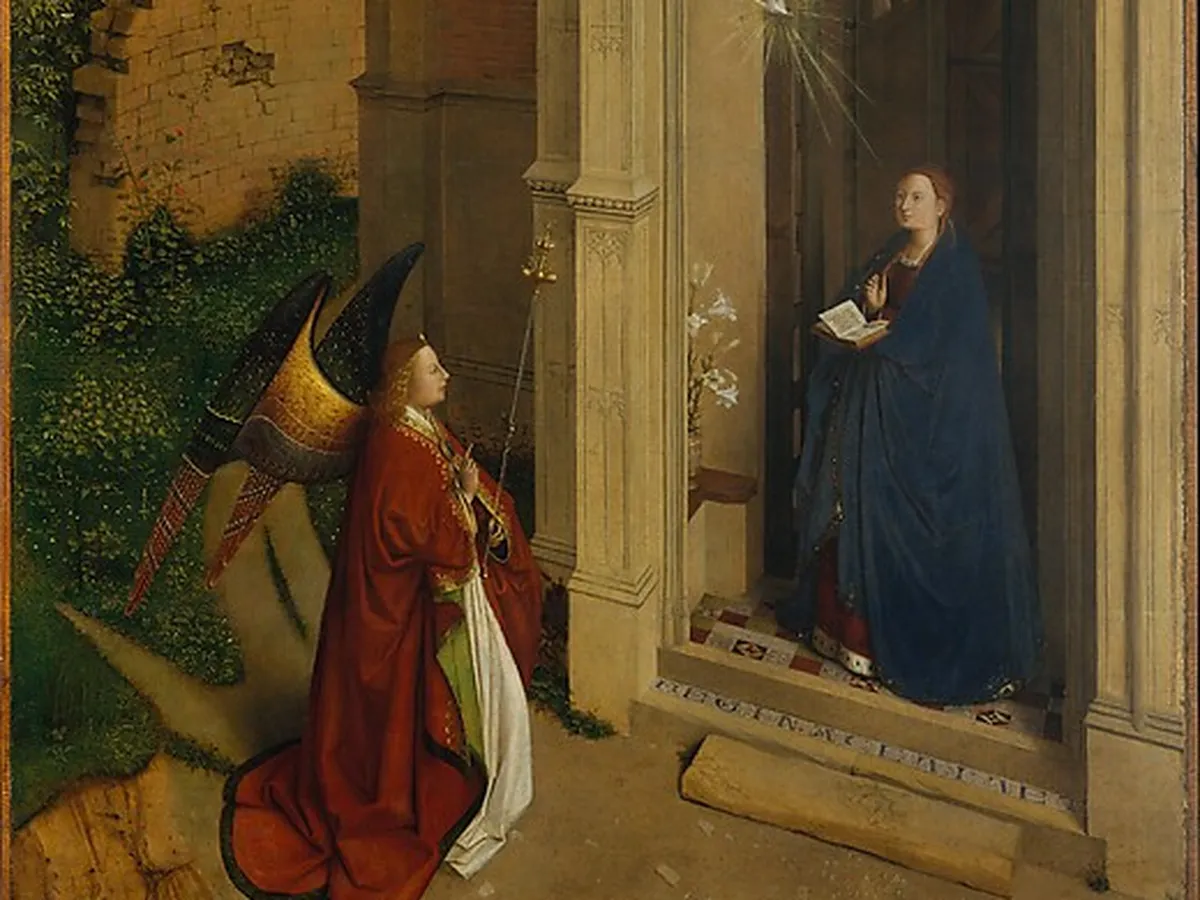
“Step 1: When the stakeholder hovers outside your workspace, maintain strict eye contact with your documentation. Do not acknowledge their sudden, glowing appearance.”
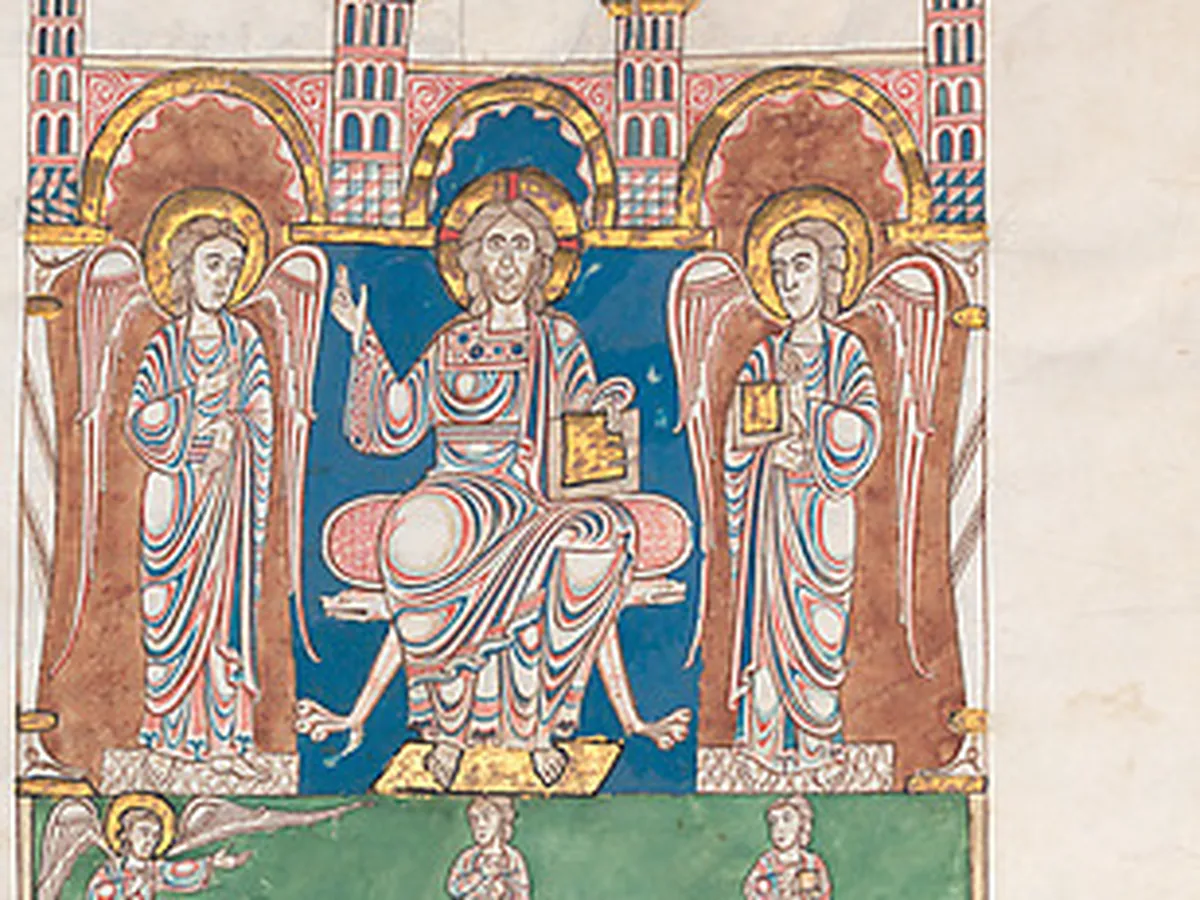
“Step 2: If the entire executive tier descends to 'brainstorm,' assume the transcription position. Just keep writing as the middle manager points out where the synergy goes.”

“Step 3: Carefully review the 'quick pivot' document they produce from the margins. Notice that the scroll is completely blank, yet somehow requires three months of dev time.”

“Step 4: When they ask if the blank scroll can be implemented by Tuesday, initiate the standard pushback protocol. HR calls this 'wrestling in the pasture,' but we call it 'scoping the MVP.'”
Petrus Christus uses architecture to signal a 'pivot': the Romanesque style on the right represents the Old Law, while the Gothic on the left marks the New. Mary is shown reading a Book of Hours, a common medieval trope emphasizing her literacy and devotion during this divine interruption.
Spanish Beatus manuscripts provided a vivid framework for understanding the Apocalypse. Here, an angel dictates the 'scope' of the Book of Revelation to Saint John. This reflects a monastic culture obsessed with authoritative transcription and the rigid hierarchy between heaven and earth.
Marginal figures like this angel often held 'banderoles' (scrolls). While some contained dialogue, others were left blank as visual placeholders for speech or future text. In the 15th century, these margins were spaces where artists could play with the relationship between image and word.
Jacob’s wrestling match was a favorite for medieval artists, symbolizing spiritual perseverance. The 'Alexander Master' was a Dutch artist known for these expressive, physically grounded scenes, proving that medieval art was capable of capturing dynamic human struggle, not just static icons.