The Subtle Agony of Flat-Pack Furniture
Step-by-step instructions for testing the absolute limits of your relationship with a single hex wrench.

“Step 1: Accept the sacred Swedish scroll. Assign one person to be the reader, while the other prepares the tiny hex wrench.”
“Step 2: When your partner suggests ignoring the scroll to 'freestyle' the wardrobe, lock your gaze forward and completely disassociate.”

“Step 3: Around hour four, you will realize the base was installed upside down. Allow the physical and emotional collapse to wash over the living room.”

“Step 4: Put the hex wrench down. Your face will permanently freeze like this, but at least the wardrobe is leaning against the wall.”
This 1101 Byzantine leaf was copied by the scribe Joannes Koulix for a 'Praxapostolos,' a book used during the Eucharist. The formal handover of the scroll reflects the high value placed on literacy and sacred texts in an era often wrongly dismissed as intellectually stagnant.
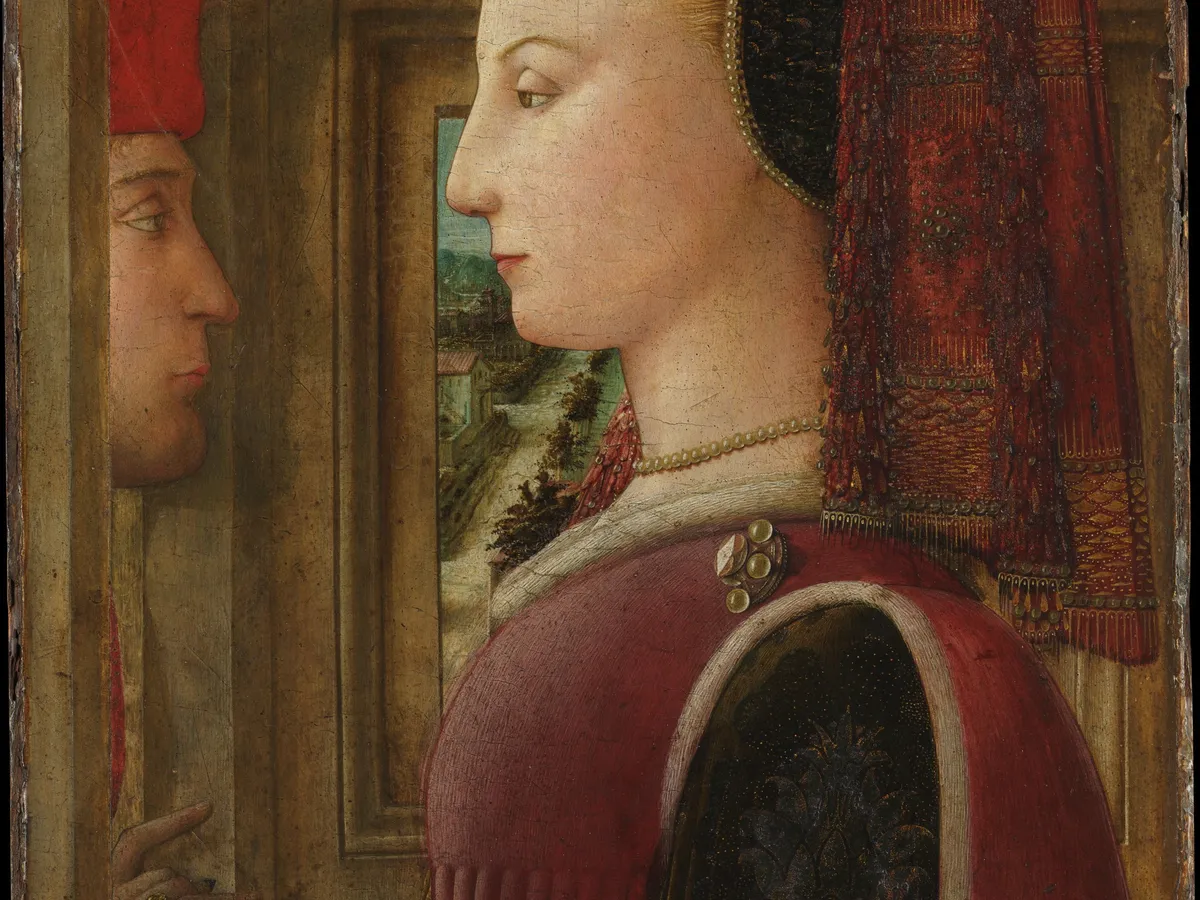
Fra Filippo Lippi’s work is the earliest surviving Italian double portrait set in a home. While the woman appears stoic, her sleeve is embroidered with 'lealta' (faithful), signaling her commitment. Such portraits were vital social tools for documenting alliances between powerful families.
These 'kalkmålningar' (lime paintings) in Swedish churches like Litslena served as 'Bibles for the poor.' Using expressive, often chaotic figures, they provided visual moral instruction to a largely illiterate public, proving that medieval art was deeply communicative and far from 'dark.'
This 'Schembart' visor from Nuremberg was used by young elites during rowdy Shrovetide parades and tournaments. Far from being purely functional armor, these grotesque faces were part of a vibrant, festive culture of public performance and social satire in the late Middle Ages.